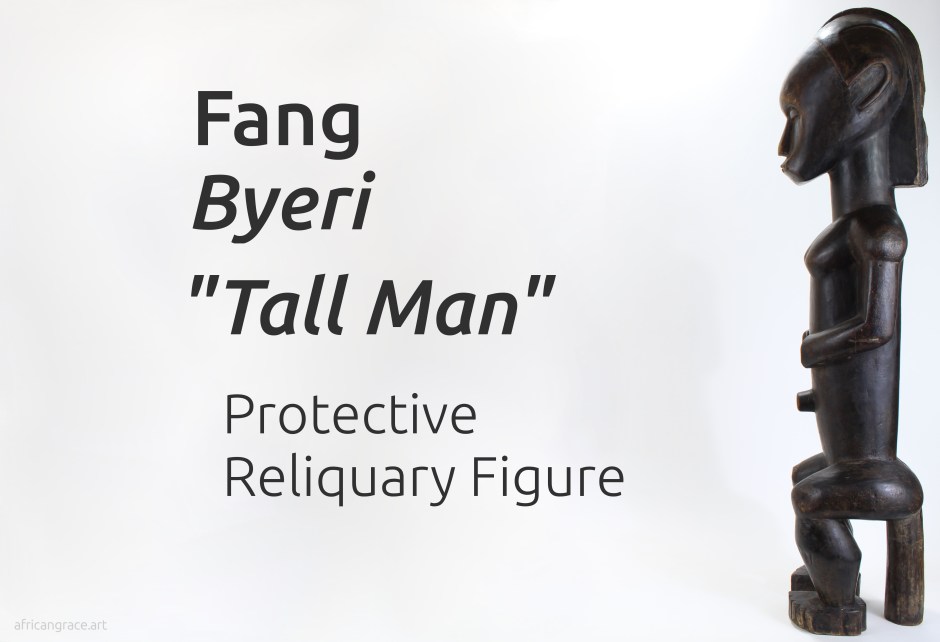
Some classic African artistic works stand out so much from their peers that they get a special name by the collectors holding them. Previously an anonymous work by an anonymous African artist, now given a “title”, the work reaches a new level of development in its Western persona. If the name is properly applied to a truly special piece by the right collector it may echo for generations in auction pamphlets and museum descriptions. Or if the item or collection is not truly first class the name will fade along with the memory of the collection as the items are re-dispersed after the collector’s death.
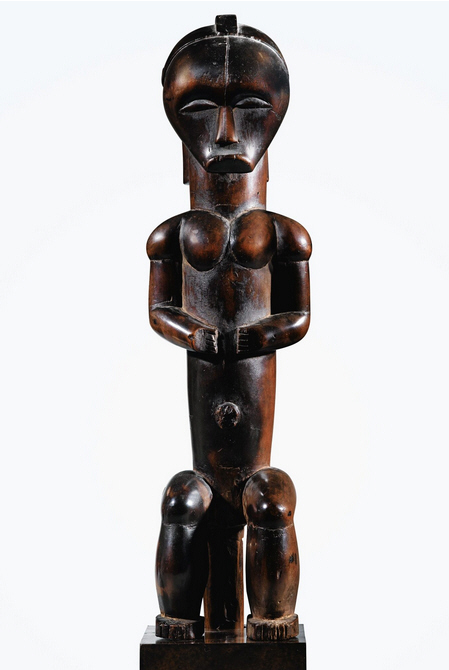
Only time will tell if the title given to this incredible Fang byeri will hold, but at just over 30 inches tall (77 cm) it certainly qualifies for the name “Tall Man”. Such monumental works are uncommon in African art, especially Fang byeri which are generally under 20 inches and rarely over 23 inches. Tall Man is one of the tallest byeri figures to have been made.
(For a more general overview of Fang byeri figures see this post.)
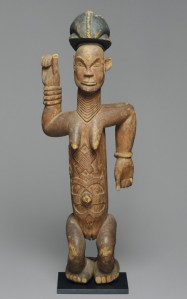
African sculptors are used to carving small works under around 18 inches high, so they can have trouble scaling up their usual proportions to larger works. A good example of this is the Lumbo figure at the Brooklyn Museum, which is a scaled up version of a type of figure that was in use at the time; the proportions have been stretched most horribly and the struggles of the artist are clear.
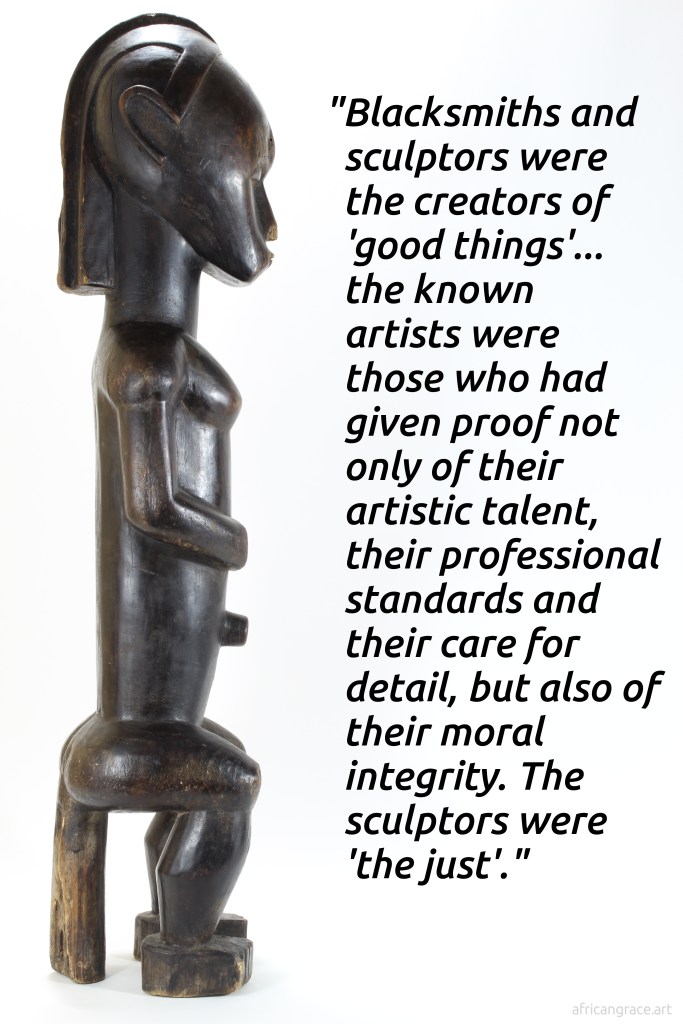
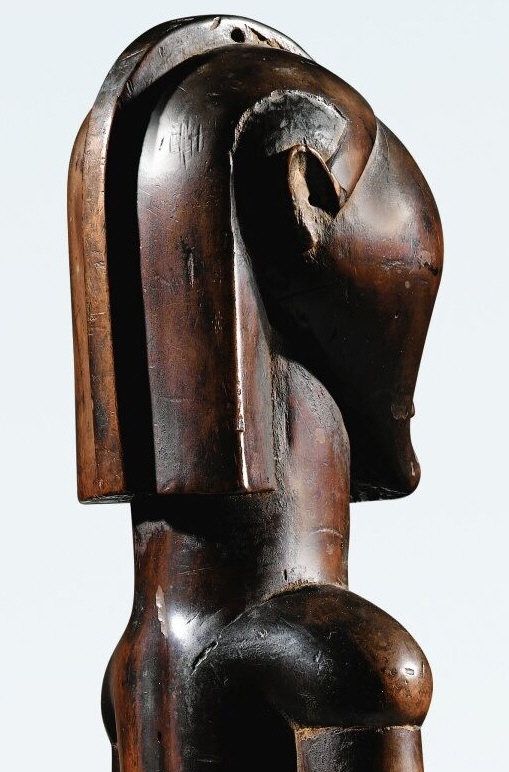
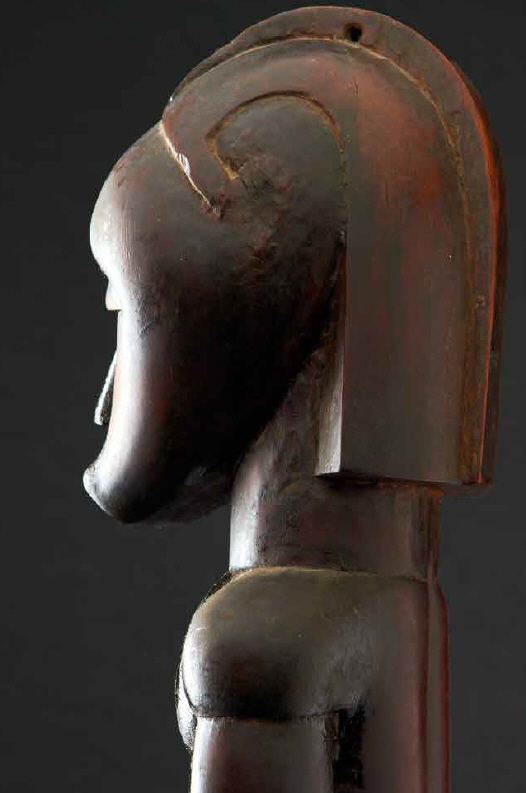
Tall Man stands out not only because of its size but also because it is a masterpiece in Fang art carved with sensitivity rarely seen in any sculpture. This sensitivity is apparent in the profile view of the bust, where the artist’s ability to transmit serenity, power, and grace through the medium of wood is clear.

Tall Man is also extremely rare in the Fang corpus as it appears to be one of a body of work of three known figures by the same sculptor, identified together here for the first time. One of these byeri passed through the hands of Charles Ratton and is reasonably well-known to collectors of African art, having been published in Arts du Gabon and sold at least twice by Sotheby’s, most recently in 2019. A second came on the market in 2016 at AuctionArtParis, apparently without a noticed connection to the Ratton figure. The third, of course, is presented here as “Tall Man”. All have in common the unusual stylistic elements of half-moon eyes, round pectorals, relatively (for the Ntumu sub-style) smooth bicep musculature under defined deltoids, and a hair style made up of two blocks, one block on top of and in the middle of the lower block, with the lower block low on the forehead and swept back from curved “elfin” ears to grow in depth at the nape of the neck as though braided hair. This last stylistic trait gives the proposed name for this sculptor, the “Master of the Two-Block Braids”.

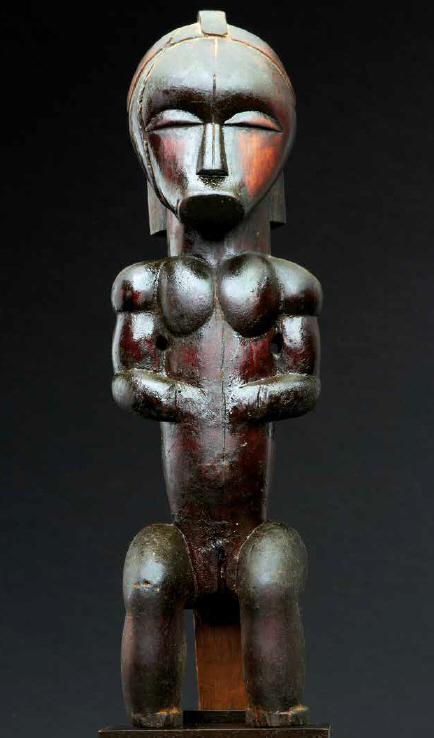
Of the three known figures the AuctionArtParis figure is the smallest, just over half as tall as Tall Man, and has the most obvious cultural accumulation. Though no conclusions should be made without physical inspection some discussion can be based on the available photos. Much material has been taken from the hands, ears, and navel, presumably for use in medicines, and holes have been drilled under the armpits after carving for attachments. Sold as a female it is more likely that the figure was a male and either had no penis to begin with or it was removed and eventually replaced with a roughly carved vagina. The patina is oily, yet a bit odd because the relatively strong orange color indicates that the figure may have recently been liberally coated with palm oil. This raises the question of what other cultural accumulation may have been added to the figure by Western hands. Yet the figure clearly shows the same unusual stylistic traits and ineffable aesthetics of the Master of the Two-Block Braids.
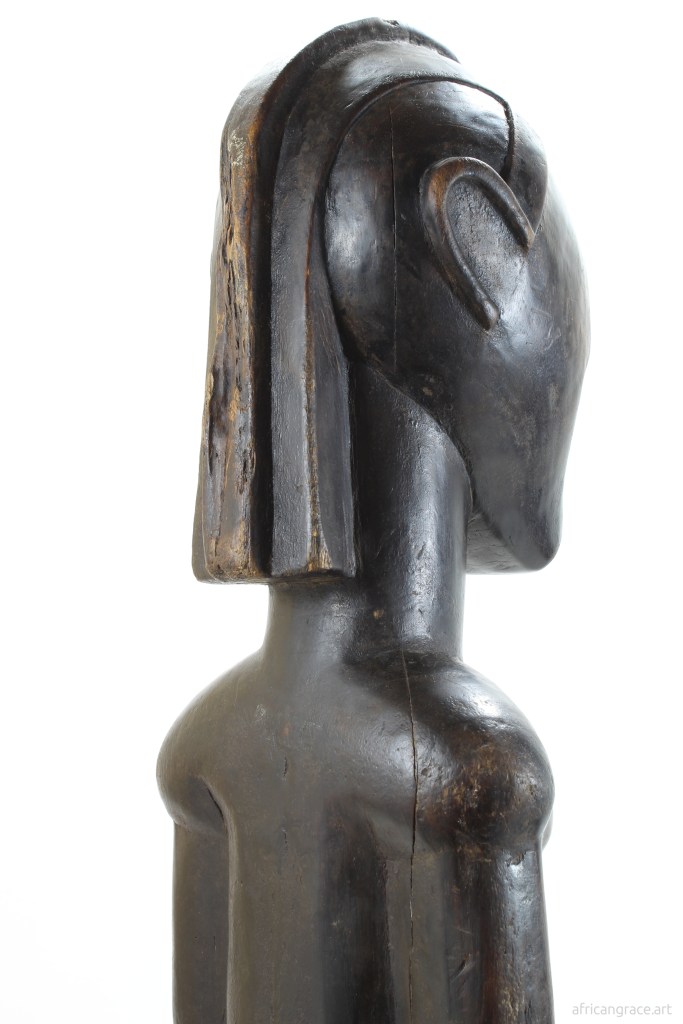
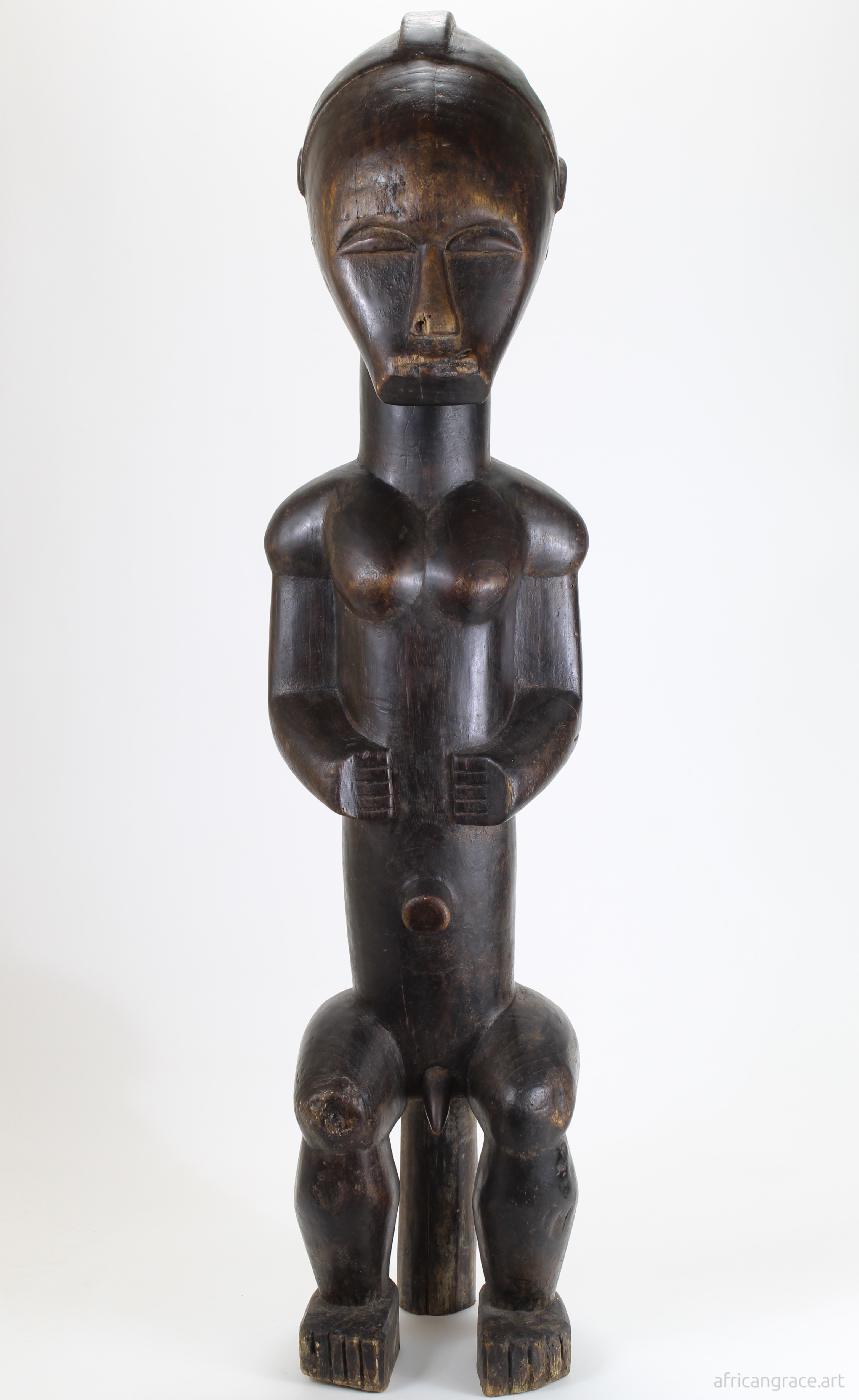
Male Fang figures often lost their penises in the process of being collected by Westerners, so the subject is relevant if somewhat strange when it comes to the topic of Fang art. Indeed, it is assumed that some figures may have had their penises removed by their African owners after converting to Christianity, or to make the figures more appealing for sale to Europeans. Like the AuctionArtParis figure the Ratton figure is missing a penis and the Sotheby’s description states the item “was neutered”. The sense that the penis on Tall Man seems a bit out of place with the rest of the figure leads one to question if it could be an addition or a replacement made later after a similar neutering; only a CRT of the figure could tell us for sure.
Tall Man shows signs of cultural accumulation more consistent with the Ratton figure than with the AuctionArtsParis figure, but perhaps indicating a longer period of traditional use. Either the oil was applied more often on Tall Man than the Ratton figure or the Ratton figure was partially cleaned soon after it was collected, however it is unlikely that either figure ever “oozed” oil as many of the famous Fang statues are known for. Tall Man has been much knocked about with many dents on the shoulders and knees and takings of material from the mouth, nose, and forehead. Given the pattern of insect damage on the coiffure and the pole it is reasonable to assume that the figure laid on its back in the bush for a time. Perhaps this damage happened when the figure was abandoned in one of the many purgings of the tools of traditional religion that convulsed Fang society in the first half of the twentieth century.
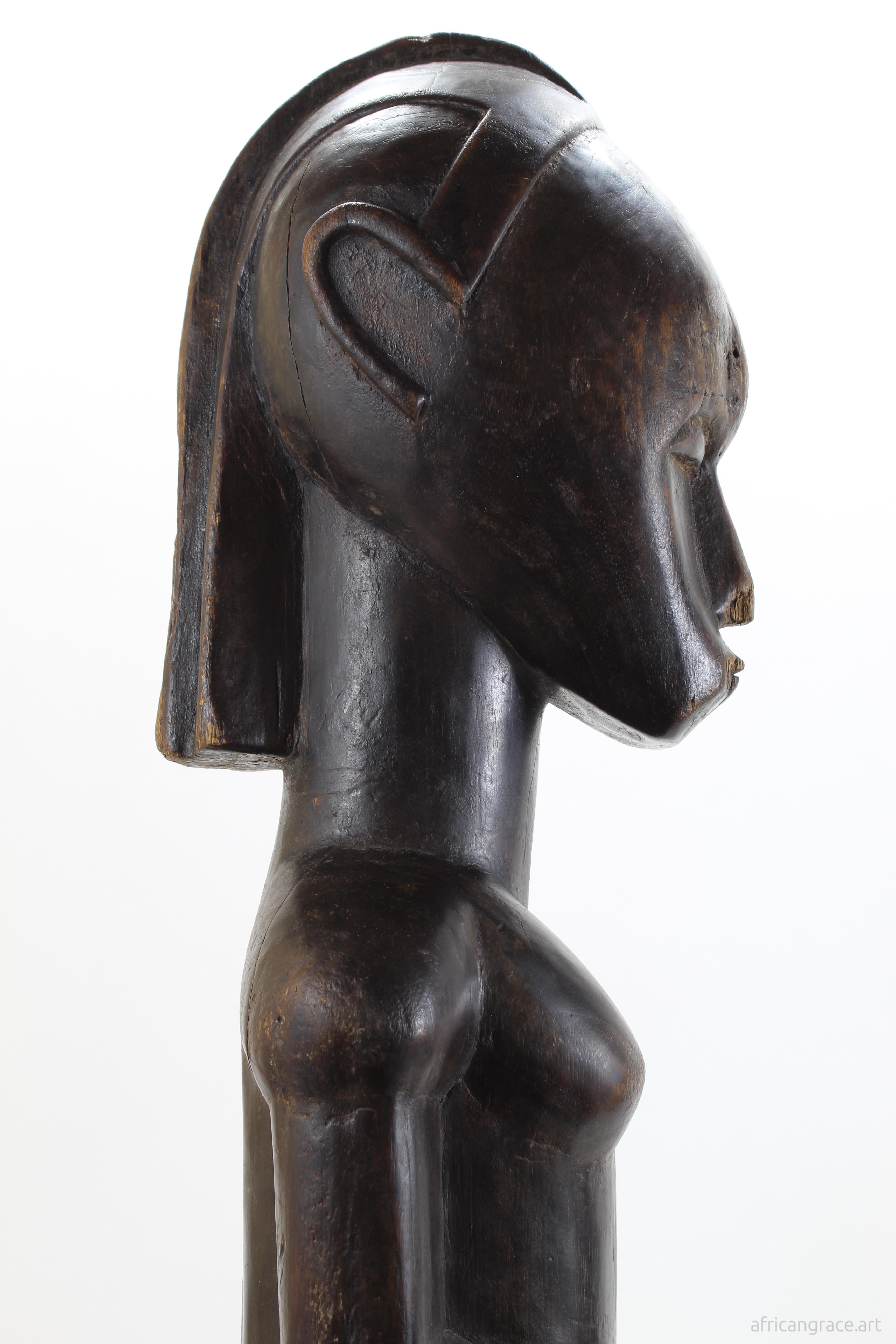

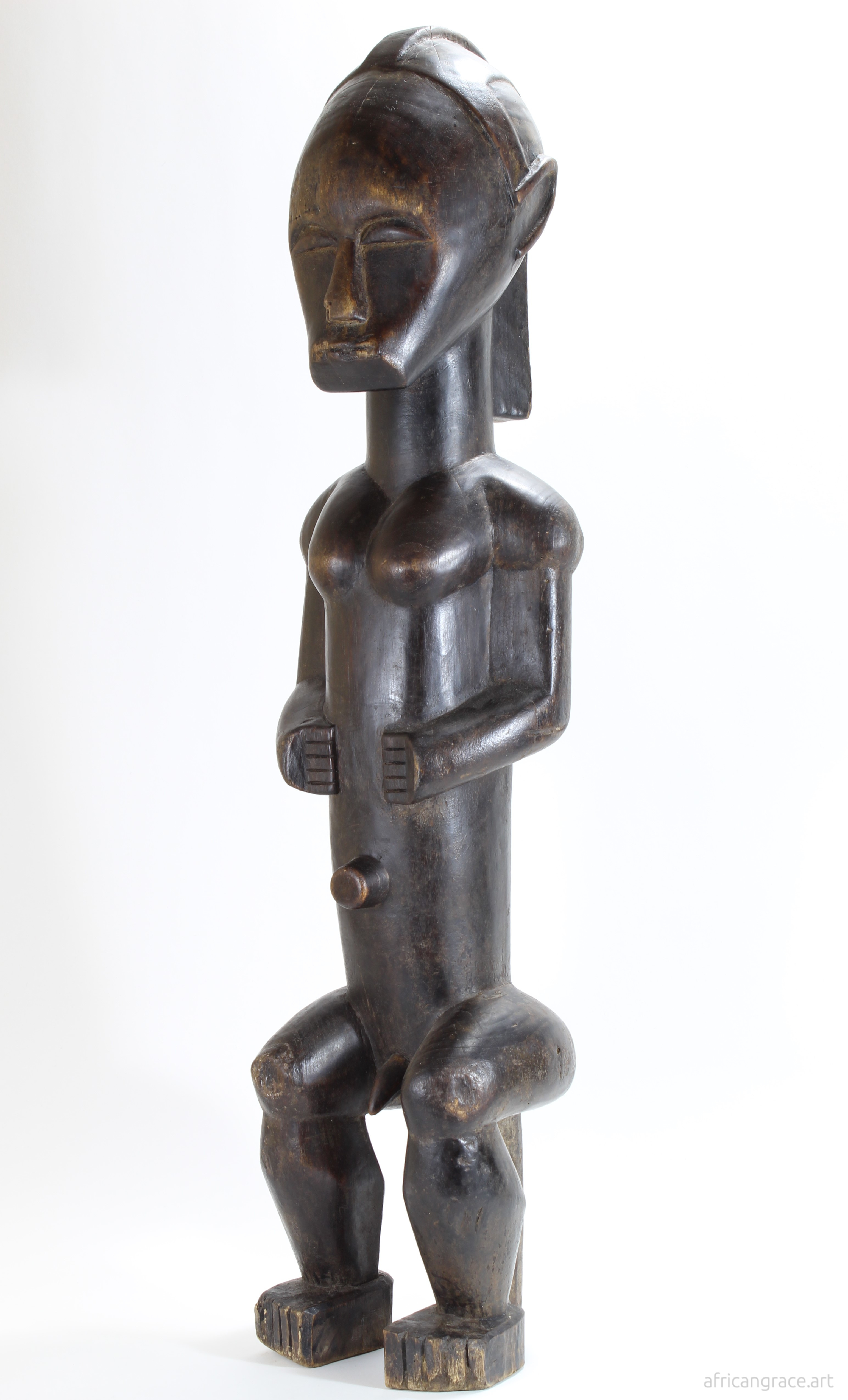

When the Bantu religion dominated village life the byeri figures were often paraded for limited audiences in ceremonies or rituals; the presence of Tall Man would have stood out at these events. Everything about Tall Man has been scaled up, but without losing aesthetic integrity, and consistent with a likeness of a tall and thin individual. The head is quite large at 10 1/2″ high from the shoulders, with a face somewhat elongated, the jaw more squared-off than the other figures attributed to the artist. The biceps are smooth and long. The legs show somewhat less musculature than typical, with the volumes not quite “absorbing the depth”. The takings of small amounts of material from the head are clear signs that the figure was considered efficacious by its owners.
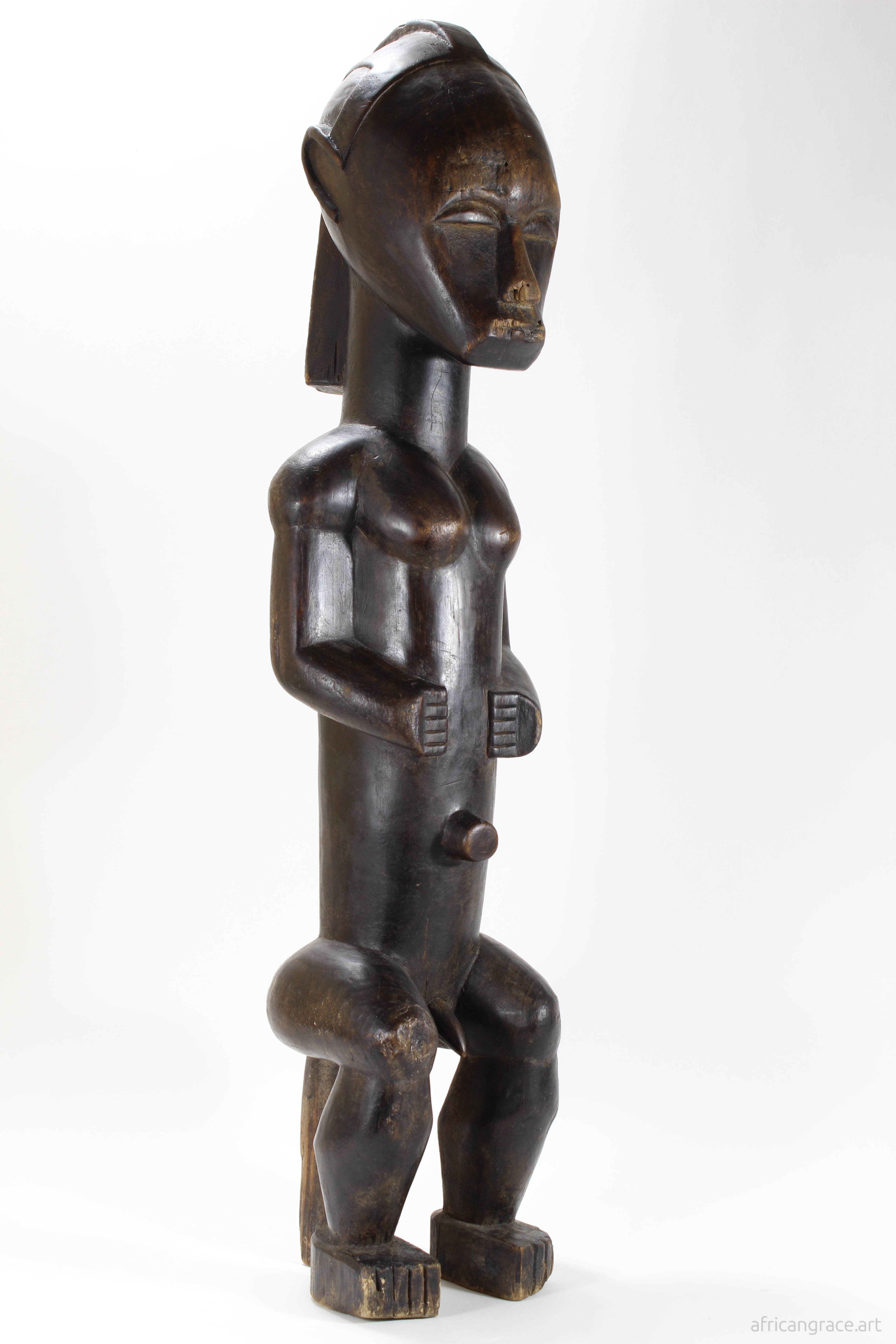
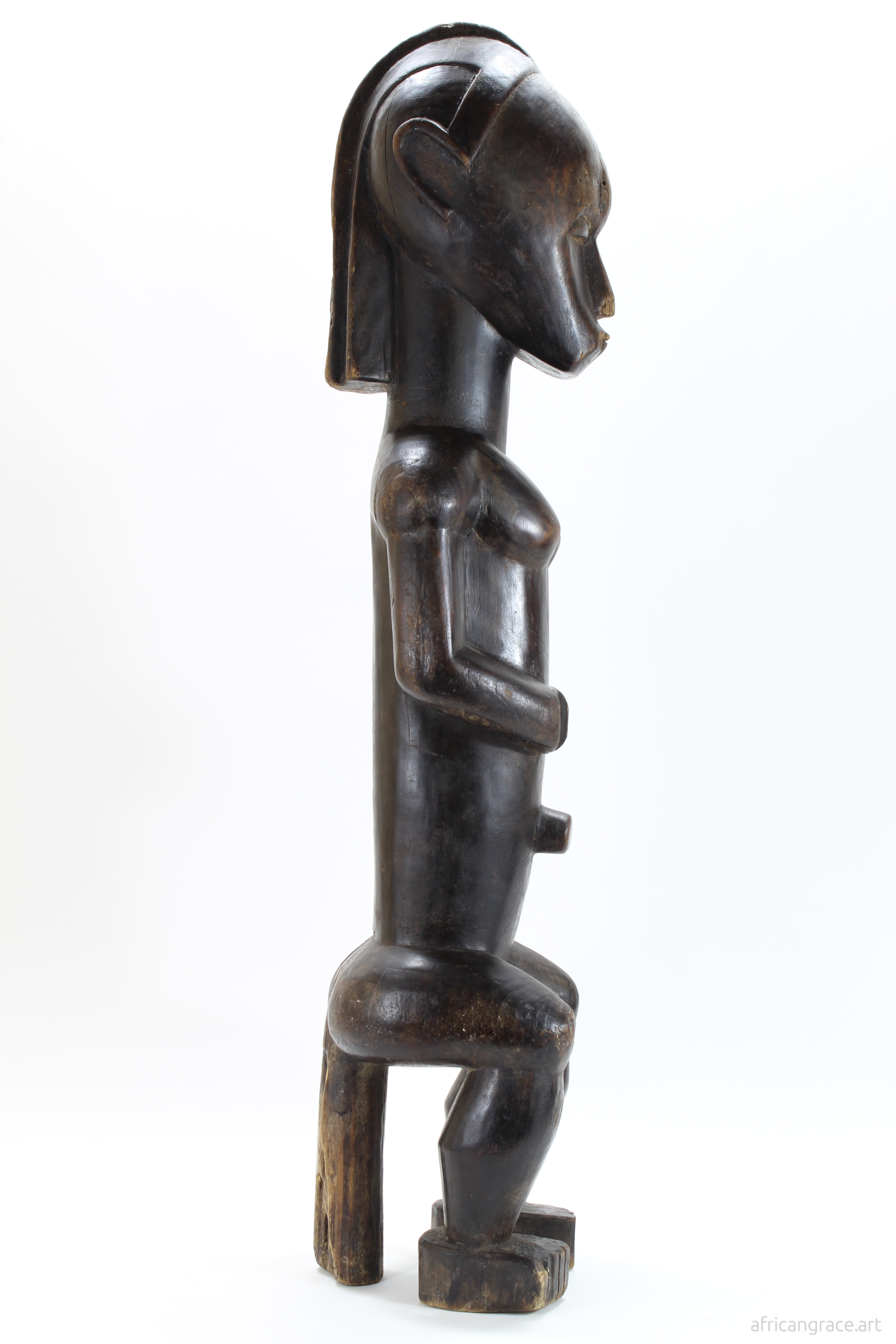

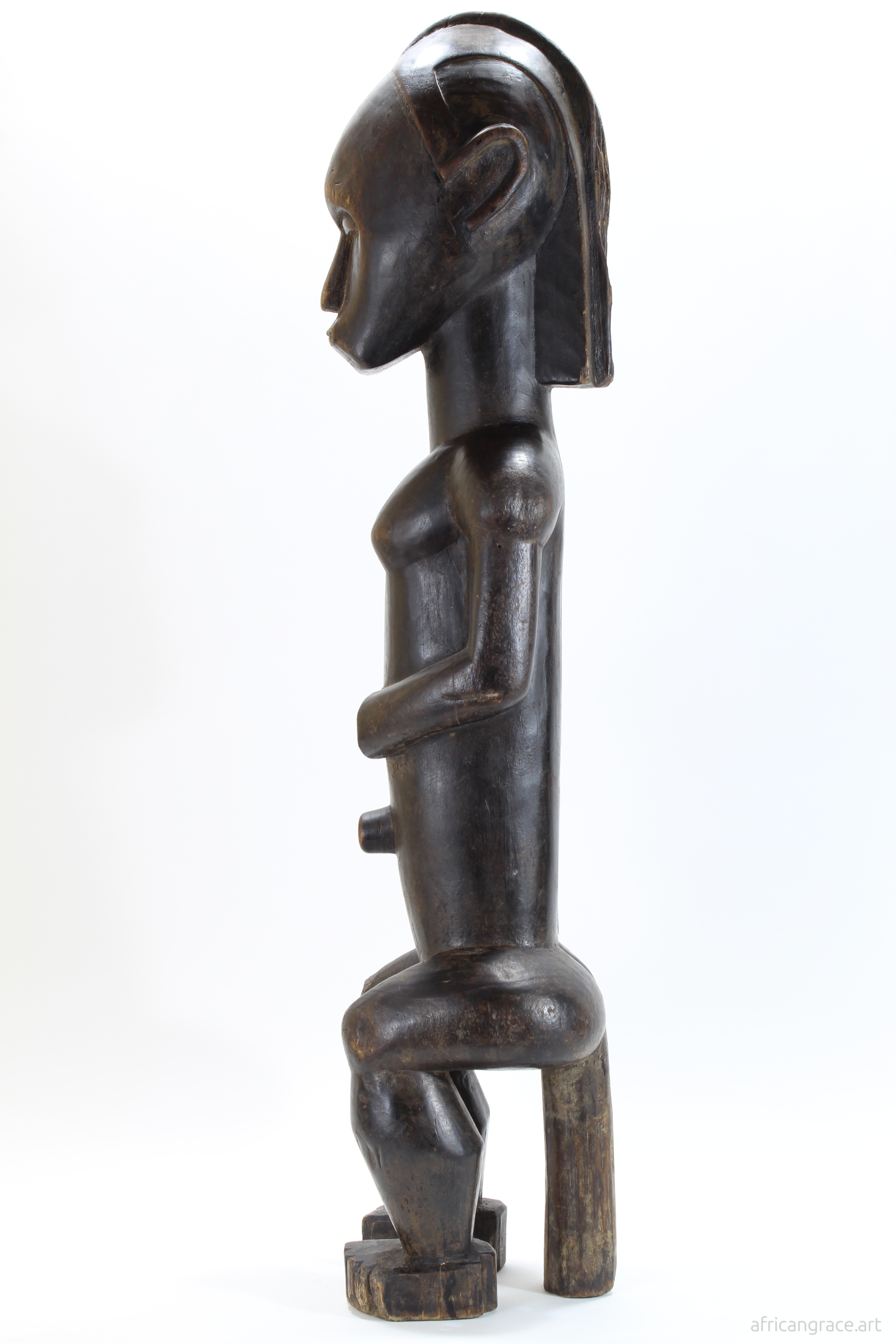
But the most remarkable aspect of Tall Man, and what sets it apart from most other byeri figures, is the sensitivity of the carving. The artist has not only successfully joined geometric volumes into a compelling representation of the human-like byeri form, but has shaped those volumes with a delicacy that is rare among Fang byeri, and which is a hallmark of the Master of the Two-Block Braids.
References
https://www.brooklynmuseum.org/opencollection/objects/4821
http://www.randafricanart.com/Fang_byeri.html
Perrois, Louis, “Fang“, Visions of Africa Series, 2006
https://www.imodara.com/discover/gabon-fang-eyema-bieri-reliquary-guardian-figure-ntumu/
 African Grace and Power