Baule sculpture, like most traditional African sculpture, provides a medium for the human residents of the physical world to interact with powers in the spiritual world. For the Baule this is a critical concern, as wild bush spirits are all around and only kept away by the more civilized village spirits. Yet even in the village one’s neighbors are scheming to get more for themselves, which in turn means less for you; the average Baule needs all the help from the spiritual world they can get!
Spiritual powers can be called upon for magical assistance, but they need a place of residence. Baule art objects serve as these residences. Owning and caring for a figure creates the opportunity for power to take up residence, and the more effort the owner puts into the relationship the more psychologically tangible that power becomes.
Most Baule figural sculpture is in the category of the “spirit spouse”, called “blolo bla” (female) or “blolo bian” (male). Spirit spouses are central to a mostly benign inward-facing magic meant to solve problems of a personal nature.
A more outward-facing magic is represented by the rarer “amuin” sculptures. Amuin can help the owner to project their will on others in the community or to defend against forces that may do them harm. Amuin requires blood sacrifice to be effective. In most cases of the “asye usu” (wild bush spirit) figures fresh blood from animals would have been applied directly to the figure with other materials such as chicken egg and millet beer, resulting over time in a thick encrusted patina. To Baule eyes this patina fits the wild and ugly nature of the bush spirits residing within.
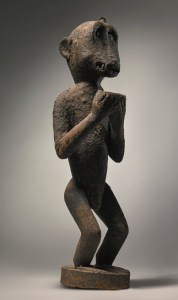
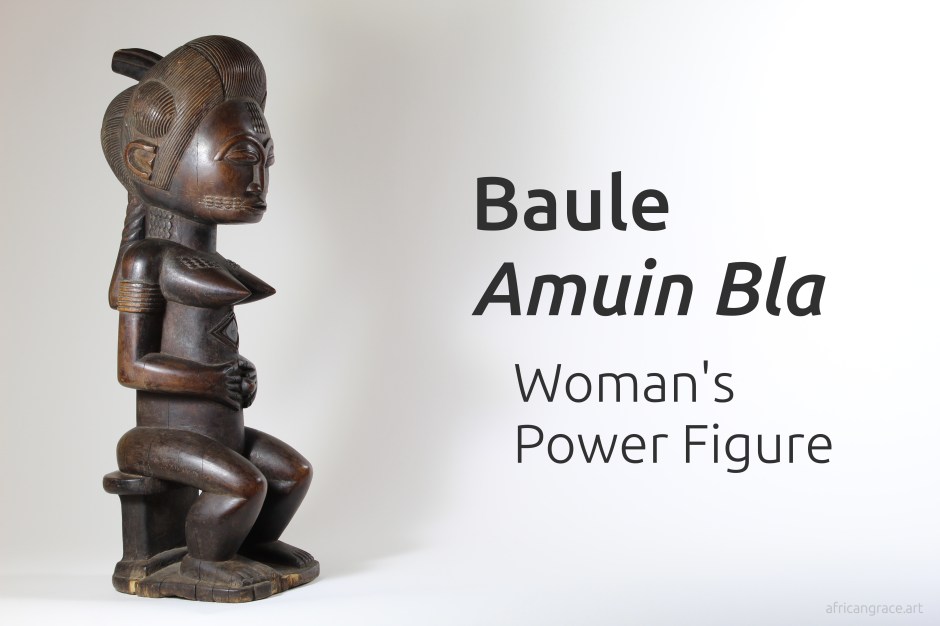
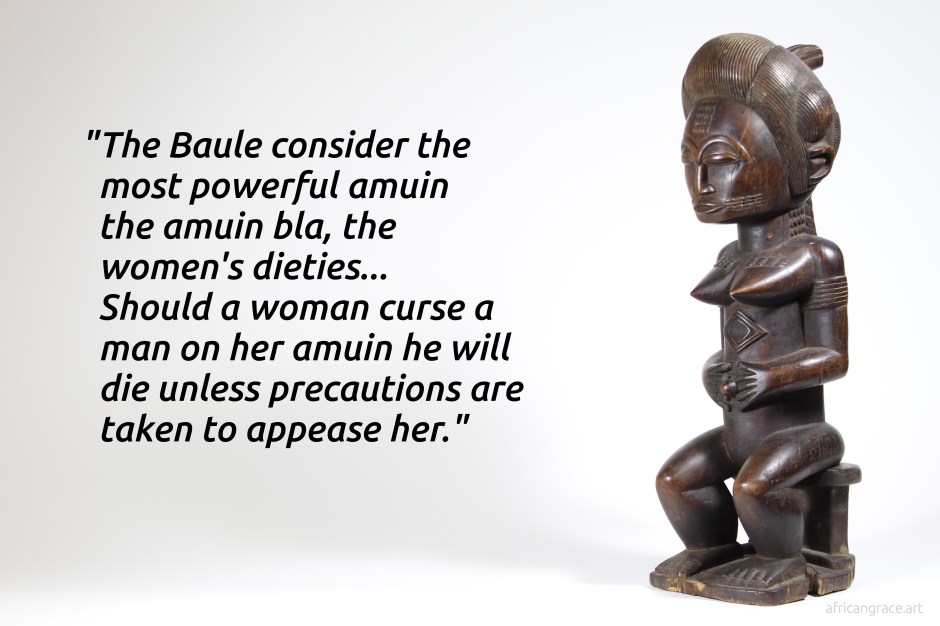
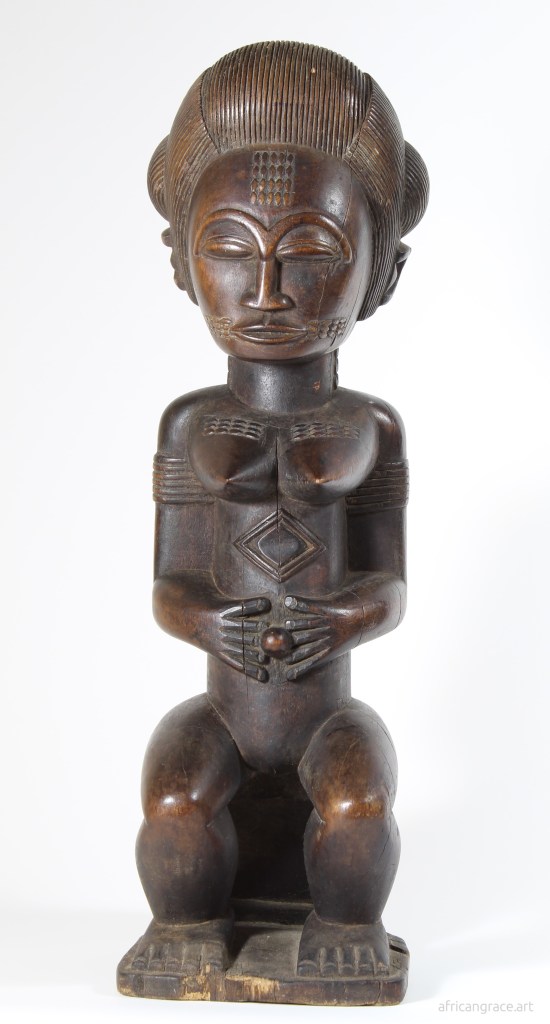
Some Amuin figures are not given a sacrificial patina and attract less wild and ugly spirits. They are perhaps best distinguished from blolo figures by generally being seated on a stool where blolo are generally portrayed standing. The collection’s figure presented here falls into an even more rare category of amuin than asye usu. Some figures were created to be a seat for a woman’s personal power, or what might be called for lack of a better term an “amuin bla”. Amuin bla provide Baule women a tangible physical representation of their own female spiritual power, and a connection of that power to the greater feminine powers in the spirit world. The figure would be consulted and called upon for spiritual assistance in everyday life. Often it would be rubbed and provided offerings to further bolster its power. Blood sacrifice would have been offered but kept off the figure to preserve its beauty to the civilized female magic it was created to attract.
The most famous amuin bla figure is the one formerly in the Myron Kunin collection, sold at auction by Sotheby’s in 2014. In the context of Baule culture the figure’s bold posture and prominently displayed genitals are an especially strong icon of female power.
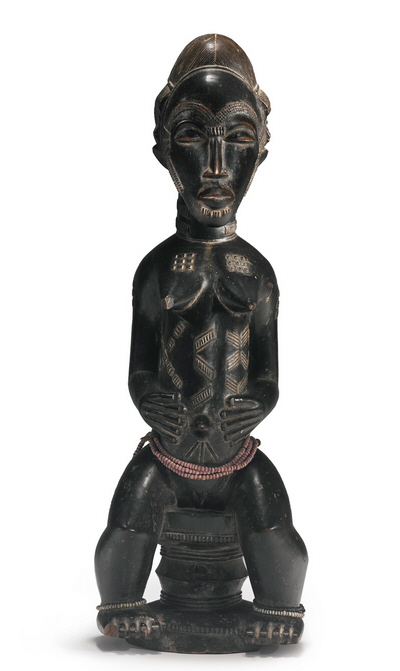
As Susan Vogel writes in her important and wonderful book Baule: African Art Western Eyes:
“The spread-legged posture of this figure is highly unusual, as is the deliberate omission of the opening that would make it possible to cover her with the normal fabric loincloth. Her aggressive nudity may express an implied threat. The female body as the source of life is one of the most potent amuin the Baule have, and clandestine or brazen looking at a woman’s sexual organs can be fatal to men. The female spirit localized in this sculpture is probably shown as close to the powers of Adyanun, the women’s deity, and able to invoke her god in defense of her human partner.”
The collection’s own amuin bla figure is not quite so bold, but shows strong localized wear consistent with a lifetime of use in personal ritual. Wear patterns on the left back and on the braid seem to indicate that the owner would have held the figure in the right hand and rubbed the back and the braid with the fingers, probably while gently tracing the facial features and coiffure with the left hand. This consummation with the spirit within would have been an important source of psychological fortification for a woman confronted with hostile spiritual forces that lurk around every corner of the Baule universe.
Standing alone as a piece of sculpture this figure is quite lovely, especially the elaborate coiffure and the strong profile. The treatment of the human form has a idealized art deco type of appeal to it. Understanding something of the context in which she was used and the real human energies invested in her makes her even more beautiful as not only a graceful work of art but also as an object of spiritual power.


References
Susan M. Vogel, Baule: African Art Western Eyes, New Haven and London, 1997
 African Grace and Power